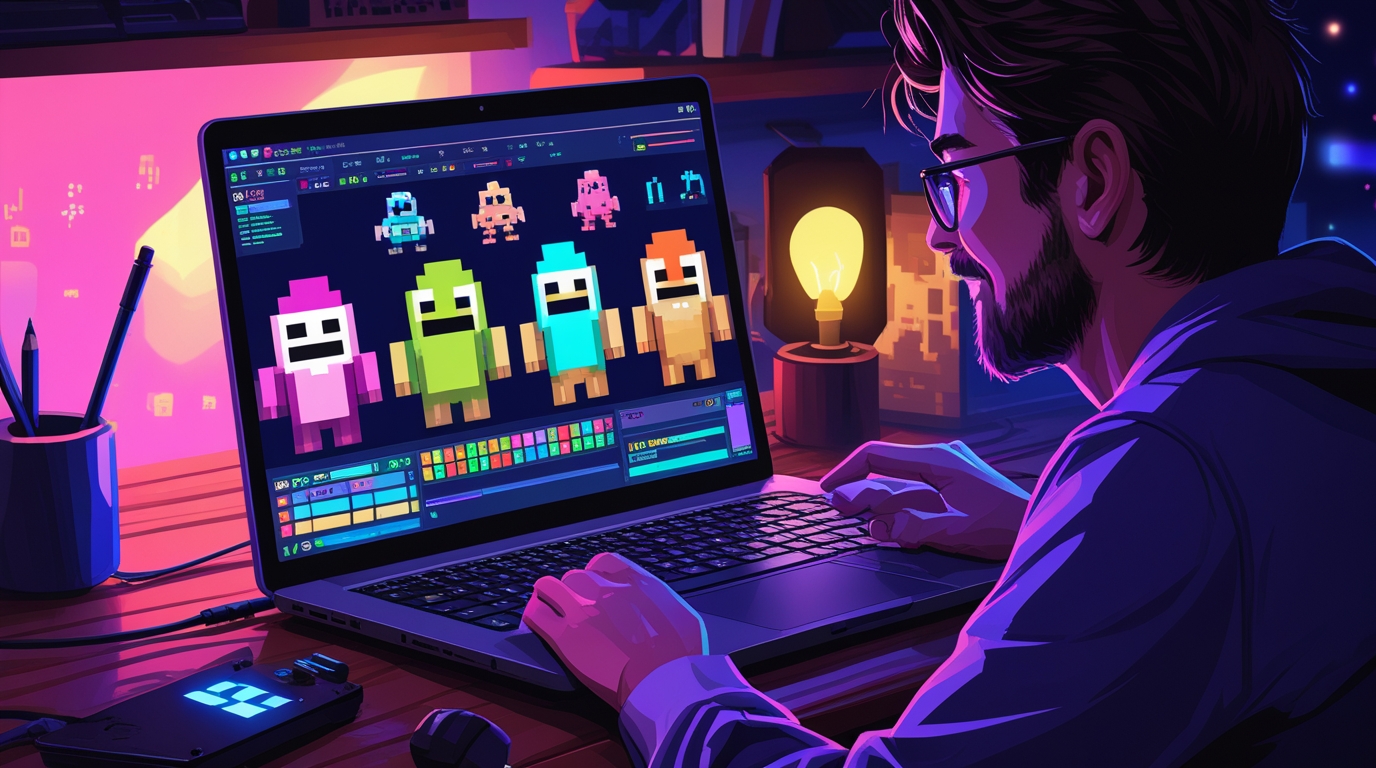
If you’re exploring indie game development, whether you’re an aspiring creator or a seasoned hobbyist looking to level up your skills, this comprehensive guide will walk you through everything you need to know. From concept to launch, tools to workflow, funding options to marketing tactics — we cover the full lifecycle of building and releasing your own indie game.
🔗 Recommended Downloads for Indie Game Development
These tools are widely used across the indie game dev community and valuable for beginners and pros alike:
Unity Game Engine (Free & Pro Versions):
👉 https://unity.com/download
Unreal Engine (Free):
👉 https://www.unrealengine.com/en-US/download
Unity and Unreal are two of the most popular game engines in indie development — each with their own strengths. We’ll explore both later in the article.
What Is Indie Game Development?
Indie game development refers to the process of creating video games independently — typically without the financial and logistical backing of a major publisher. Indie developers often work in small teams or solo, driven by creative passion and the desire to build unique experiences that don’t always fit mainstream commercial formulas.
Indie games range from small 2D pixel titles to ambitious narrative worlds and cutting-edge experimental art games. The indie game development scene includes genres such as:
- Platformers and Metroidvanias
- Narrative-driven adventures
- Puzzles and experimental titles
- Roguelikes and simulation games
- Multiplayer and social experiences
In the USA and worldwide, indie games have become a vibrant part of gaming culture, influencing mainstream trends and often delivering some of the most innovative experiences each year.
Why Indie Game Development Matters
Indie game development is important for several reasons:
1. Creative Freedom
Indie developers can explore ideas bigger studios might consider too risky or niche — and sometimes these ideas become cultural phenomenon (think Undertale, Hollow Knight, Stardew Valley).
2. Skills and Career Launchpad
Many developers begin with indie projects and go on to work at major studios — or turn their indie careers into full-time business.
3. Accessibility
With affordable game engines and resources online, anyone with a passion and basic computer can participate.
4. Community and Culture
Indie games often foster passionate communities, collaborative modding scenes, and supportive feedback loops between creators and players.
The Indie Game Development Journey — Step by Step
While the process varies by project and team size, most successful indie games follow this general pipeline:
- Concept and Ideation
- Prototyping
- Pre-Production
- Production
- Testing and Feedback
- Marketing and Community Building
- Launch and Post-Launch Support
1. Concept and Ideation
Every game begins with an idea. Some questions to ask yourself early:
- What is the core mechanic?
- What emotion or experience do you want players to have?
- What genre and style are you aiming for?
- Why is your game worth making?
At this stage, simple sketches, notes, and mood boards are more valuable than fully polished graphics.
2. Prototyping
Prototyping is about creating a basic playable version of your idea. This helps you test:
- Gameplay feel
- Mechanics validity
- Fun factor
- Feasibility
Tools like Unity and Unreal let you produce playable prototypes rapidly (often in hours or days rather than weeks).
Prototyping best practices:
- Build simple! Don’t focus on visuals yet
- Play the prototype yourself early and often
- Iterate rapidly
3. Pre-Production
In this phase, you lay the groundwork for the full game:
- Solidify the design documentation
- Plan your art and sound direction
- Write simple narratives or level outlines
- Decide on core tools, plugins, and workflows
This is also a good time to set a target platform (PC, console, mobile, VR) and research similar games.
4. Production
This is the longest phase — where your game gets built.
Tasks include:
- Coding the game logic
- Creating or importing art assets
- Composing or acquiring sound and music
- Designing levels
- Polishing interactions and interfaces
- Integrating UI/UX systems
Teams with more members will divide these tasks (programmers, artists, sound designers, QA testers). Solo devs often wear multiple hats.
5. Testing and Feedback
Testing is crucial. Even simple playtests reveal:
- Bugs
- Balance issues
- Confusing interfaces
- Unpolished mechanics
Invite friends or early adopters — many developers use closed betas or demo releases to gather feedback and iterate.
6. Marketing and Community Building
Without marketing, even good games can go unnoticed.
Strategies include:
- Building a devlog on itch.io, Twitter, Reddit
- Releasing behind-the-scenes development videos
- Creating trailers and screenshots
- Engaging with players on Discord communities
- Sending press kits to game reviewers and streamers
Marketing doesn’t start at launch — it begins on day one.
7. Launch and Post-Launch Support
Launching your game is one thing — keeping your players engaged is another. Post-launch support often includes:
- Patches and bug fixes
- Balance updates
- New content
- Seasonal events
Some developers also release DLCs or expansions to keep the community active.
Essential Tools for Indie Game Development
Great games are built with great tools. Here’s a breakdown of the most popular and powerful options:
🎮 Game Engines
Unity
Unity is a versatile, cross-platform engine used by indie and professional studios alike. It supports 2D, 3D, VR, AR and mobile — with a huge community and asset store.
Pros:
- Strong support and documentation
- Large user community
- Assets and plugins available
🔗 Download: https://unity.com/download
Unreal Engine
Unreal is known for high-fidelity graphics and powerful built-in systems. It’s free to start and scales well to AAA-level visuals.
Pros:
- Spectacular graphical potential
- Blueprint visual scripting
- Strong built-in pipeline
🔗 Download: https://www.unrealengine.com/en-US/download
Godot
Godot is an open-source alternative gaining rapid popularity for 2D and 3D games. It’s lightweight and scriptable with GDScript, C#, and more.
Pros:
- Free and open source
- Great 2D support
- Lightweight
Learning Resources
Here are high-value learning resources many indie developers use:
Unity Learn
Official tutorials, beginner pathways, and project walkthroughs from Unity.
Unreal Online Learning
Free video courses straight from Epic Games.
YouTube Channels
Channels like Brackeys (Unity), Unreal Engine Official, and GDQuest offer high-quality tutorials.
Books
Books like Game Programming Patterns, The Art of Game Design and Unity Game Development in 24 Hours are excellent foundations.
Funding Your Game
Indie developers often fund projects through:
1. Personal Savings
Most common for one-person teams.
2. Crowdfunding (Kickstarter, Indiegogo)
Pitch your idea and pre-sell the concept to interested players.
3. Grants and Funds
Some organisations provide funding for artistic projects, including games.
4. Early Access Sales
Sell the game in unfinished form on platforms like Steam to fund ongoing production.
5. Publisher Deals
Some indie teams partner with indie-friendly publishers for funding and marketing support.
Launch Platforms
Once your game is ready, here are the main platforms to launch on:
PC
- Steam
- itch.io
- Epic Games Store
Mobile
- Apple App Store
- Google Play Store
Console
- Nintendo eShop
- Xbox Marketplace
- PlayStation Store
Each platform has submission requirements, revenue shares, and certification steps — research these before release.
Common Mistakes in Indie Game Development
Many aspiring developers run into similar hurdles:
🚫 Trying to Do Everything Alone
Good teamwork — or outsourcing critical tasks like art and sound — improves quality.
🚫 Feature Creep
Avoid adding too many bells and whistles. Prioritise core fun.
🚫 Skipping Playtesting
Release early builds to get real feedback.
🚫 Ignoring Marketing Until Launch
Marketing is ongoing, not a final step.
Case Studies of Successful Indie Games
Undertale
Created by Toby Fox, this narrative RPG became a cultural phenomenon without publisher backing.
Stardew Valley
Eric Barone single-handedly developed this farming sim — now one of the most beloved indie titles.
Hollow Knight
A small team at Team Cherry built a deep metroidvania with critical and commercial success.
Studying these success stories reveals patterns: passion, polish, strong community, and smart scope management.
Trends in Indie Game Development (2026)
The landscape shifts each year. Some current trends include:
- User-generated content tools integrated into games
- Cross-platform play as a standard expectation
- AI tools assisting in asset creation (art, music cues)
- Rise of narrative simulation and emergent gameplay titles
- Streaming and social share-first mechanics
Indie developers who adapt to trends without losing their creative identity often do best.
Indie Game Development Careers
A career in indie game development can take multiple paths:
1. Full-Time Indie Developer
Self-employed or running a small studio.
2. Contract / Freelance Work
Doing art, coding or music for other indie teams.
3. Teaching and Tutorial Creation
Many developers supplement income by teaching others.
4. QA and Community Management
Indie teams — like larger studios — need support roles too.
How to Build Your Indie Dev Portfolio
Whether you want a job or freelance clients, a solid portfolio matters:
- List your game projects with screenshots and play links
- Include code snippets or GitHub projects
- Show video playthroughs or trailers
- Share testimonials from playtesters or users
Community and Networking for Indie Developers
Communities are essential:
Discord Groups
Indie Dev cities, Unity, Unreal, Pixel art hubs
Reddit Forums
r/gamedev, r/IndieDev, r/Unity3D
Game Jams
Events like Ludum Dare, Global Game Jam push creative deadlines and portfolio builds.
Networking helps you learn faster and find collaborators.
Launch Checklist
Before your indie game goes live, check this:
✔ Playtesting complete
✔ Bug list cleared
✔ Core mechanics polished
✔ Trailer and screenshots ready
✔ Press kit prepared
✔ Store pages set up
✔ Social profiles active
✔ Community channels ready
✔ Launch day plan finalized
Detailed Q&A — Indie Game Development
Q1: What exactly is indie game development?
It’s the process of creating games independently — without traditional publisher support — often with small teams or solo creators.
Q2: Do I need to know how to code?
Not always. Tools like Unity, Unreal and visual scripting can reduce coding needs, but coding helps build custom mechanics.
Q3: What’s the best engine for beginners?
Unity is widely recommended for beginners due to its community and tutorials. Unreal offers powerful visuals with Blueprint scripting.
Q4: How long does indie game development take?
It depends on scope — small games can finish in weeks, larger titles may take years.
Q5: Can I make money from indie games?
Yes — through sales, crowdfunding, early access, DLC and merchandising.
Q6: Do I need a team?
Not necessarily, but teams help share workload and expertise.
Q7: What’s the hardest part of indie development?
Balancing scope, finding audience, and ongoing marketing.
Q8: Should I start with small prototypes?
Always. Small prototypes build skills and reduce risk.
Q9: How do I get feedback on my game?
Use playtesting groups, forums, beta testers, and early players.
Q10: Is indie development worth it?
Yes — for creative control, skill growth, and potential success.
Indie game development is a rewarding journey of creativity, problem solving, and community engagement. With the right tools, realistic goals, and persistent work, you can bring your ideas to life and build games that resonate with players worldwide.
🔥 Related Posts
Nerdle Game Daily Math Puzzle 2026: Play Free Online

Free FreeCell Solitaire Without Downloading – Full Guide, Tips & How to Play Online Easily

Bejeweled Blitz on Facebook – Complete Player Guide, Tips, Scoring Strategy & FAQs

Candy Crush Saga — The Complete Guide to Levels, Boosters, Tips & Strategy
Chess Online 2026: Free Play vs AI Guide