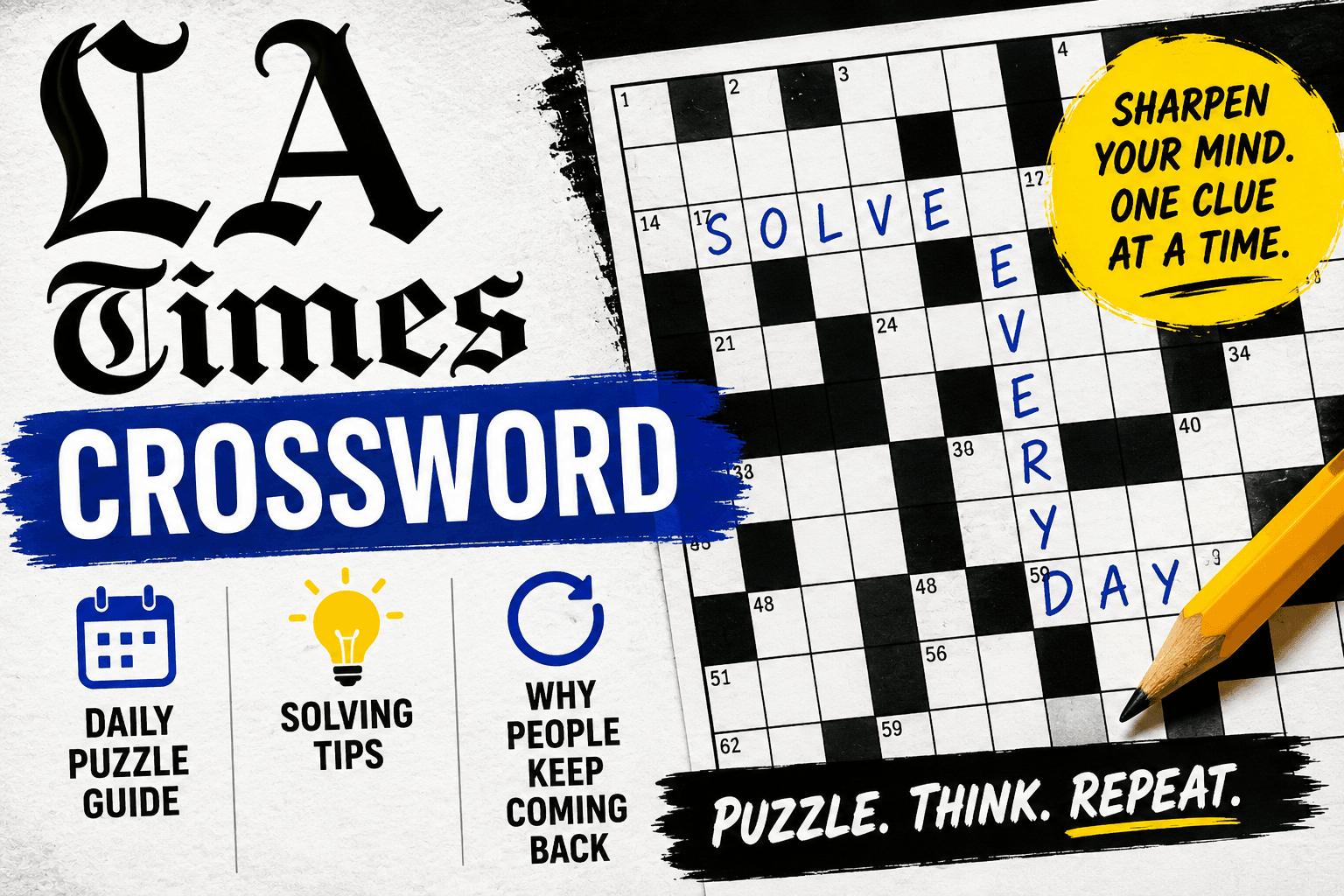
The LA Times crossword is one of the best-known daily newspaper crossword puzzles in the United States. It is published by the Los Angeles Times and is available online as part of the LA Times games section. The official puzzle page describes it as a free daily crossword, with expert-crafted clues that become tougher as the week goes on.
For many solvers, it sits in a comfortable spot: challenging enough to feel rewarding, but not so intimidating that beginners cannot get started. That balance is a big reason people search for terms like LA Times crossword today, LA Times crossword answers, LA Times crossword clues, and Los Angeles Times crossword puzzle every day.
The puzzle is not just about filling empty squares. It is about noticing wordplay, understanding clue style, using crossing letters, and learning the habits of daily crossword construction.
Where Can You Play the LA Times Crossword?
The easiest place to play is the official Los Angeles Times Daily Crossword page. The LA Times games section also includes other puzzle options such as Mini Crossword, Midi Crossword, Sudoku, Word Search, Wordflower, Jigsaw, and more.
The official daily crossword page allows players to start the puzzle online and, when logged in, track progress features such as streaks, scores, achievements, and speed.
That makes it useful for two types of solvers:
People who simply want a daily puzzle break.
People who like measuring solving time and improving their crossword routine.
How Often Is the LA Times Crossword Published?
The LA Times crossword is a daily puzzle. Tribune Content Agency lists the Los Angeles Times Daily Crossword with a frequency of 7/week and a release schedule of Monday through Sunday.
That daily schedule matters because solvers often build a habit around it. Some people solve with morning coffee. Some solve during lunch. Some save the Sunday puzzle for a slower weekend session.
A daily crossword works best when it becomes part of a routine. The more often you solve, the more familiar the clue style becomes.
Who Edits the LA Times Crossword?
The LA Times crossword is edited by Patti Varol. Tribune Content Agency notes that Varol became editor after working with longtime LA Times crossword editors Rich Norris and Joyce Nichols Lewis. It also states that she has more than 20 years of experience editing and creating puzzles.
Varol’s background matters because crossword editing shapes the voice of a puzzle. Editors decide how clean the grid should be, how fair the clues are, how fresh the answers feel, and how balanced the difficulty should be.
A good crossword editor keeps the puzzle challenging without making it feel careless or unfair.
Why the LA Times Crossword Is Popular
The LA Times crossword has a few things going for it.
First, it is available every day. That gives solvers a steady puzzle habit.
Second, the difficulty usually builds through the week. Early-week puzzles tend to be more approachable, while later-week puzzles often require sharper wordplay and more patience.
Third, the clues cover a wide range of knowledge. You may see pop culture, history, sports, food, geography, literature, language, abbreviations, and everyday phrases in the same grid.
Fourth, the puzzle is widely syndicated. Tribune Content Agency lists the daily crossword as available in the U.S., Canada, and internationally.
That reach helps explain why so many people look up LA Times crossword clues and answers. A single clue can be encountered by solvers in many different places.
How the LA Times Crossword Works
The LA Times crossword uses the standard American-style crossword format.
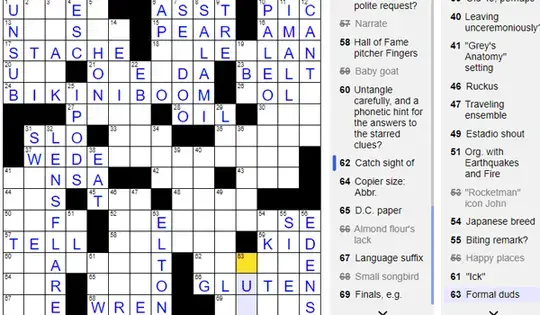
You get a grid of white and black squares. The white squares are filled with answers. The black squares separate the entries. Clues are split into Across and Down.
Each answer crosses other answers. That is the key to solving. You do not need to know every answer immediately. You use the letters from answers you do know to help solve the ones you do not.
For example, if one Across answer gives you the first letter of a Down answer, that crossing letter may be enough to unlock the clue.
Good solvers do not solve every clue in order. They move around the grid, grab the easy answers first, and let the crosses do the hard work.
Why Monday Puzzles Are Easier Than Later-Week Puzzles
The LA Times crossword page says the clues get tougher as the week goes on.
That means a Monday puzzle is usually a good place for beginners. The clues tend to be more direct. The wordplay is lighter. The answers are often more familiar.
Later in the week, the puzzle may become trickier. Clues may use misdirection. Short clues may have unexpected meanings. Common words may be clued in unusual ways.
For example:
“Pitcher” might not mean a baseball player. It could mean a water jug.
“Jam” might mean traffic, music, fruit spread, or a difficult situation.
“Capital” might refer to money, a city, or an uppercase letter.
That kind of clue writing is what makes crosswords interesting. The puzzle teaches you to slow down and question the obvious meaning.
LA Times Crossword Answers: When Should You Look Them Up?
Searching for LA Times crossword answers is common. There is no shame in checking an answer if you are truly stuck.
But if you want to get better, do not look up the whole puzzle too quickly.
A better method is:
Try the puzzle first.
Fill in every answer you know.
Use crossing letters to narrow hard clues.
Take a short break if you get stuck.
Look up only one clue if needed.
Return to solving on your own.
This way, the answer helps you learn instead of simply finishing the grid for you.
If you look up every answer too soon, you finish the puzzle but miss the practice.
How to Solve the LA Times Crossword Faster
Speed comes from pattern recognition. The more puzzles you solve, the quicker your brain recognizes common clue styles.
Here are practical ways to improve.
Start With the Easy Clues
Do not force yourself to solve the puzzle from 1-Across to the end. That is a slow way to work.
Scan the clues and fill in the answers you know immediately.
Look for:
Short fill-in-the-blank clues
Common abbreviations
Plural clues
Names you recognize
Straight definition clues
Very short answers
Every easy answer gives you letters for harder answers.
Use Crosses Before Guessing
Crossing letters are your best friend.
If you are not sure whether an answer is correct, check the letters that cross it. A wrong guess can damage the whole section of the grid.
A good crossword guess should feel supported by nearby answers. If it creates strange crossing letters, it may be wrong.
Watch for Clue Misdirection
Crossword clues are often written to make you think of one meaning while the answer uses another.
Example:
“Bank job” might make you think of a robbery.
But the answer could relate to finance, rivers, or office work.
When a clue seems too simple but does not fit, look for another meaning.
Learn Common Crossword Words
Every crossword has repeated short answers. These are often called crosswordese.
You will see names, abbreviations, old words, and short vowel-heavy answers again and again.
Common examples include:
ERA
ORE
ALOE
ARIA
ONO
ERIE
ELI
OREO
EPEE
AREA
These answers may feel strange at first, but they become easy with practice.
Pay Attention to the Clue’s Grammar
The clue and answer usually match in tense, number, and part of speech.
If the clue is plural, the answer is probably plural.
If the clue is past tense, the answer is probably past tense.
If the clue is informal, the answer may also be informal.
If the clue uses an abbreviation, the answer may be abbreviated too.
This small habit helps eliminate bad guesses.
Use Fill-in-the-Blank Clues First
Fill-in-the-blank clues are often easier because your brain recognizes phrases quickly.
For example:
“Gone with the ”
“ and cheese”
“Better late than ___”
These clues can open a section of the grid fast.
Do Not Be Afraid to Leave a Section
If one corner is not working, move somewhere else.
Crosswords are not solved in a straight line. A clue that feels impossible now may become obvious after you fill in two crossing letters later.
The best solvers know when to move on.
Common LA Times Crossword Clue Types
The LA Times crossword uses many clue styles. Learning these styles makes solving easier.
Straight Definition Clues
These are the simplest clues. The clue directly defines the answer.
Example:
“Large body of water” = SEA
Fill-in-the-Blank Clues
These rely on familiar phrases.
Example:
“Peanut butter and ___” = JELLY
Abbreviation Clues
If a clue contains an abbreviation, the answer may be abbreviated too.
Example:
“Doctor’s org.” could lead to AMA.
Wordplay Clues
These clues use double meanings, puns, or playful wording.
Example:
“Something to draw with” could mean a pen, but in another context it could be breath, attention, or a card.
Theme Clues
Many crossword puzzles have a theme. The longest answers may share a joke, pattern, phrase change, or hidden word.
Once you understand the theme, the rest of the puzzle often becomes easier.
Question Mark Clues
A clue ending in a question mark usually signals wordplay.
Do not read it too literally. The answer is probably playful.
What Makes the Sunday LA Times Crossword Different?
Sunday crosswords are usually larger than weekday puzzles. Tribune’s older LA Times specifications list the daily puzzle as 15×15 and Sunday as 21×21.
A Sunday puzzle is not always the hardest puzzle, but it is longer. It often has a bigger theme and more entries to work through.
Think of Sunday as a longer sit-down puzzle rather than a quick weekday solve.
Best Strategy for Beginners
If you are new to the LA Times crossword, start with Monday or Tuesday puzzles.
Do not worry about speed. Focus on learning how clues work.
A beginner-friendly routine looks like this:
Solve Monday puzzles first.
Fill in all the easy clues.
Use crossings to help with harder clues.
Look up only a few answers when stuck.
Review the puzzle after finishing.
Notice clue patterns that repeat.
The review step matters. If you learn why an answer was correct, you will recognize that type of clue next time.
Best Strategy for Intermediate Solvers
If you already solve easier puzzles, start challenging yourself later in the week.
Try solving without checking answers too early. Work through tough sections slowly. Study theme entries. Pay attention to misdirection.
Intermediate solvers improve by learning restraint. Do not guess wildly. Do not force an answer because it almost fits. Let the crossings confirm your thinking.
A clean solve is better than a fast messy solve.
Best Strategy for Faster Solving Times
If your goal is speed, the official LA Times page includes time tracking and personal best features when playing online.
To improve your time:
Solve at the same time each day.
Use keyboard shortcuts if playing online.
Start with high-confidence entries.
Do not stare at one clue too long.
Learn common short answers.
Practice early-week puzzles for speed.
Use later-week puzzles for skill.
Speed is not only about typing fast. It is about knowing when to move on.
Why You Keep Getting Stuck
Most solvers get stuck for the same reasons.
You are reading the clue too literally
Crossword clues often hide behind ordinary meanings. If the direct meaning does not work, try another angle.
You guessed one wrong answer
One wrong answer can break an entire corner. If nothing around it works, question your earlier entry.
You missed the theme
Theme answers often explain the puzzle’s trick. If the long answers feel strange, look for a shared pattern.
You do not know a common crossword word
Some short answers repeat often. The more you solve, the less these will slow you down.
You are tired
Crosswords require focus. Sometimes the best move is to step away and return later.
Should You Use a Crossword Solver?
A crossword solver can help, but it should be used carefully.
If you enter every clue into a solver, you are not really solving. You are copying. That may finish the puzzle, but it will not make you better.
Use a solver only when you are completely blocked. Even then, try searching for one answer, not the entire grid.
A better tool is your own notes. Write down clues that fooled you. After a few weeks, you will start seeing the same clue habits again.
LA Times Crossword vs. Mini Crossword
The LA Times games section includes a Mini Crossword as a separate game. The page describes the Mini Crossword as proof that “good things come in small packages.”
The daily LA Times crossword is better when you want a fuller solving session.
The mini is better when you want a quick puzzle break.
Both can help improve your solving skills, but they train different habits. A mini rewards fast recognition. A full crossword rewards patience, theme awareness, and grid management.
Why the LA Times Crossword Is Good for Your Daily Routine
A crossword gives your brain a clean task. There is a grid. There are clues. There is a finish line.
That makes it different from scrolling through endless feeds or jumping between apps. A crossword asks for attention.
It can also be a quiet daily ritual. You learn a little vocabulary. You remember names and places. You catch jokes. You struggle through a hard clue and get the small satisfaction of finally seeing it.
That is why people keep playing.
LA Times Crossword FAQ
Is the LA Times crossword free?
The official LA Times Daily Crossword page describes the puzzle as free to play every day.
Does the LA Times crossword come out every day?
Yes. Tribune Content Agency lists the Los Angeles Times Daily Crossword frequency as 7/week, with release days Monday through Sunday.
Does the LA Times crossword get harder through the week?
Yes. The official LA Times crossword page says the clues get tougher as the week goes on.
Who edits the LA Times crossword?
The LA Times crossword is edited by Patti Varol, who has more than 20 years of puzzle editing and constructing experience.
What is the best day for beginners to solve the LA Times crossword?
Monday is usually the best starting point because early-week puzzles are generally more approachable.
Why do people search for LA Times crossword answers?
Most people search for answers when they are stuck on a clue, checking a completed grid, or trying to understand a difficult entry.
Is the Sunday LA Times crossword harder?
It is usually larger and more time-consuming. Bigger does not always mean harder, but the Sunday puzzle often has a broader theme and more clues to solve.
The LA Times crossword has lasted because it does the basic things well. It gives solvers a fresh puzzle every day, a steady difficulty curve, and enough variety to keep the habit interesting.
For beginners, the best approach is simple: start early in the week, fill the easy answers first, trust the crossing letters, and do not rush to look up every answer.
For experienced solvers, the fun is in the details: cleaner grids, sharper clues, better themes, and faster solving times.
The more you solve, the more the puzzle starts to speak its own language. Once that happens, the LA Times crossword becomes less of a daily challenge and more of a daily routine worth keeping.
🔥 Related Posts

NYT Wordle Hint Today: Game #1339, Monday, February 17, 2025

Cool Math Games Unblocked – Play Free Online Brain-Boosting Games Anywhere (2025 Guide)
Crossword Puzzles Free Online – The Complete American Guide to Playing Anytime, Anywhere

Advanced 24 Game 2026: Free Online Math Puzzle

Letter Garden – Complete Guide & Review