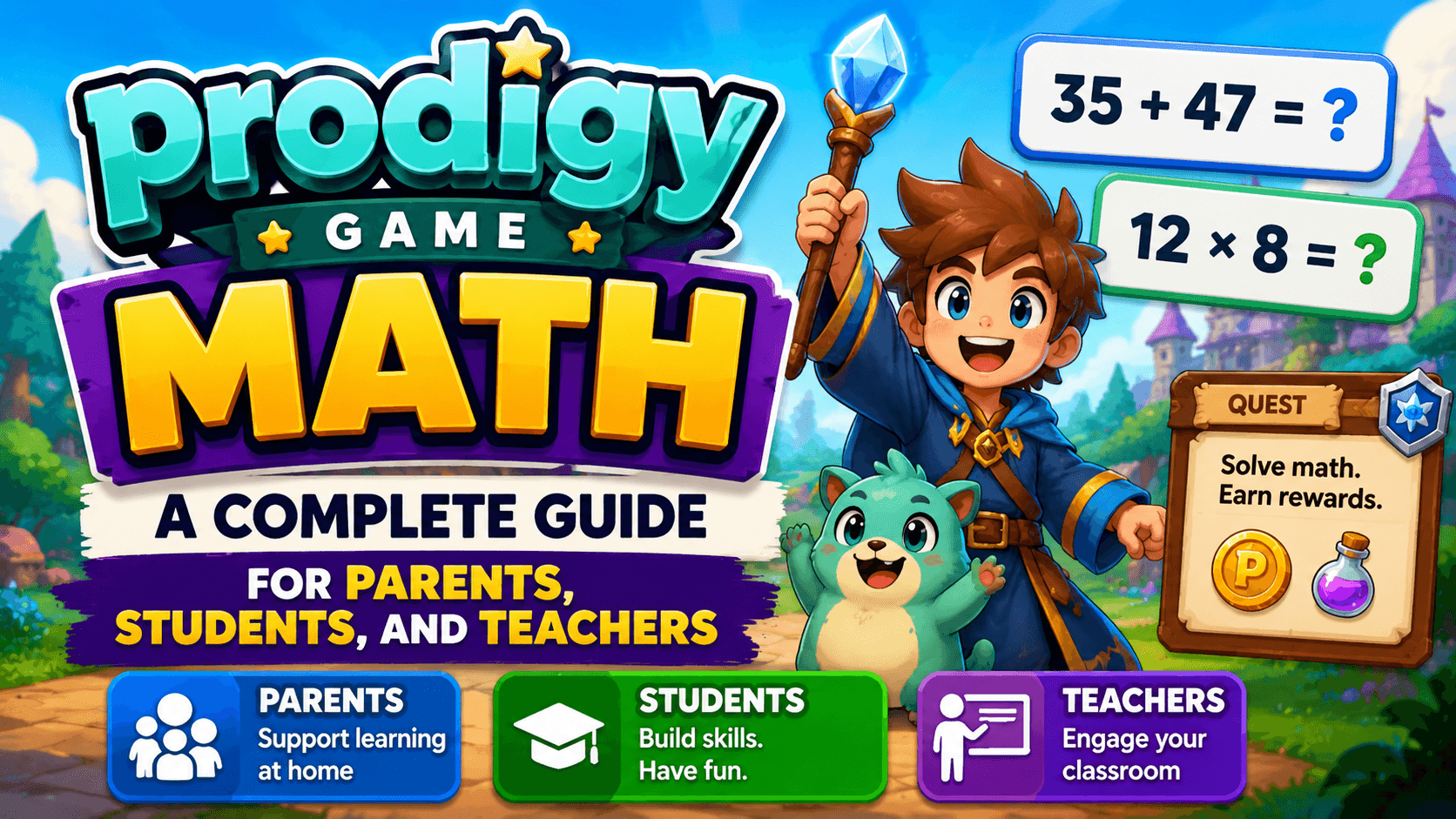
Prodigy Game Math is an online math learning game that helps students practice math through a fantasy-style adventure. Instead of solving plain worksheets, students answer math questions while completing quests, battling characters, earning rewards, and moving through a game world.
It is mainly used by students in grades 1 through 8, along with parents, teachers, tutors, and homeschool families. The platform is designed to make math practice feel more engaging, especially for children who lose interest in traditional drills.
Parents comparing online learning tools may also want to read our guides on Best Math Apps for Kids and Educational Games That Actually Help Children Learn Math.
For official product details, you can visit the Prodigy Math official page at:
https://www.prodigygame.com/main-en/prodigy-math
Prodigy Game Math at a Glance
| Feature | Details |
|---|---|
| Platform Name | Prodigy Math Game |
| Main Purpose | Game-based math practice |
| Best For | Grades 1–8 |
| Common Users | Students, parents, teachers, homeschoolers |
| Learning Style | Adaptive math questions inside a fantasy game |
| Main Subject | Math |
| Other Learning Areas | English and additional learning content may also be available |
| Cost | Core math content is free; paid memberships add extra features |
| Devices | Browser, Chromebook, laptop, tablet, iPad, iPhone, Android |
| Best Use | Supplemental math practice |
Why Prodigy Game Math Is Popular in the USA
Prodigy is popular in the United States because it solves a simple problem: many kids need more math practice, but they do not always enjoy worksheets or textbook drills.
The game format makes practice feel less stressful. Students can create characters, explore a fantasy world, collect rewards, and answer math problems along the way. For many children, that turns math from something they avoid into something they are willing to try.
Parents like it because it feels more productive than regular screen time. Teachers like it because it can support classroom practice. Homeschool families like it because it gives children another way to review math skills independently.
Prodigy is not a full replacement for a teacher, tutor, or structured math curriculum. It works best as an extra practice tool. If your child struggles with motivation, you may also find our article on How to Help a Child Who Hates Math useful.
How Does Prodigy Game Math Work?
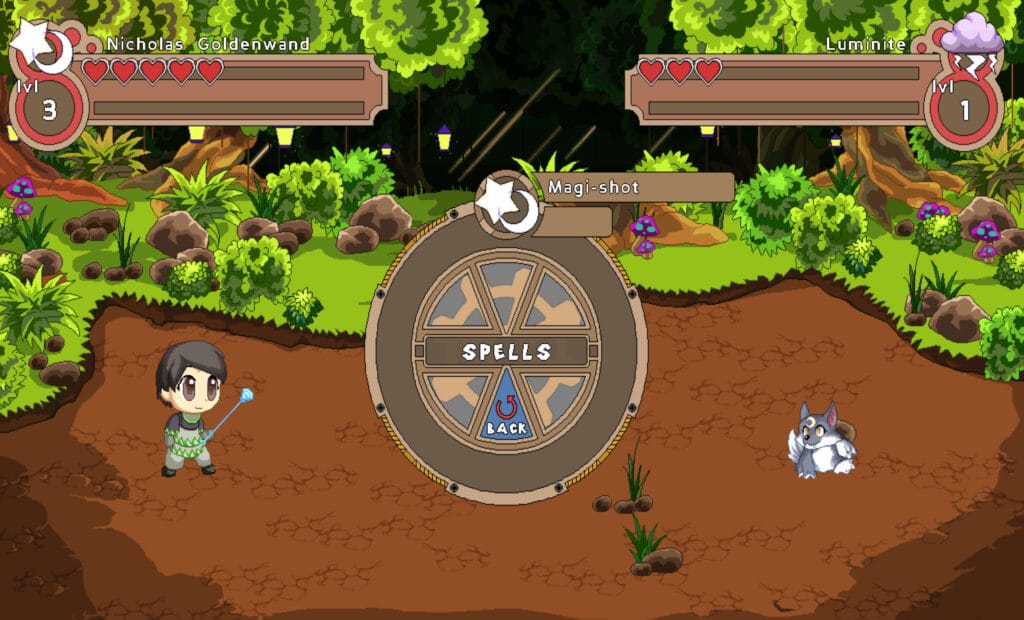
Prodigy combines math practice with role-playing game elements. A student logs in, creates a character, enters the game world, and answers math questions during battles or activities.
Correct answers help the student move forward. The game may adjust questions based on grade level, performance, or assigned skills.
Basic Student Flow
| Step | What Happens |
| 1 | Student logs in or creates an account |
| 2 | Student chooses a character |
| 3 | The game gives math questions |
| 4 | Student answers questions during gameplay |
| 5 | Correct answers help the student progress |
| 6 | Parents or teachers can review progress |
This setup is useful because the student has a reason to keep practicing. The goal is not only to finish math problems, but also to continue the game.
What Grades Does Prodigy Math Cover?
Prodigy Math is mainly designed for students in grades 1 through 8.
That makes it useful for elementary and middle school math practice.
| Grade Level | Common Math Topics |
| 1st Grade | Addition, subtraction, number sense |
| 2nd Grade | Place value, word problems, basic operations |
| 3rd Grade | Multiplication, division, fractions |
| 4th Grade | Multi-digit operations, factors, fractions |
| 5th Grade | Decimals, volume, fractions, graphing |
| 6th Grade | Ratios, expressions, negative numbers |
| 7th Grade | Proportions, integers, equations |
| 8th Grade | Linear equations, geometry, algebra readiness |
For a closer look at covered standards, see the official Prodigy curriculum page:
https://www.prodigygame.com/main-en/math-curriculum-standards
Students who need structured lessons alongside game-based practice may also benefit from our comparisons of Khan Academy vs Prodigy and IXL vs Prodigy.
What Math Skills Can Students Practice?
Prodigy covers many common math topics taught in U.S. elementary and middle schools. The exact questions may depend on the student’s grade level, teacher assignments, and performance inside the platform.
| Math Area | Example Skills |
| Addition | Basic sums, multi-digit addition, regrouping |
| Subtraction | Basic subtraction, borrowing, word problems |
| Multiplication | Times tables, multi-digit multiplication |
| Division | Basic division, long division, remainders |
| Fractions | Comparing, simplifying, adding, subtracting |
| Decimals | Place value, operations, comparisons |
| Geometry | Shapes, angles, area, perimeter |
| Measurement | Time, length, volume, units |
| Data | Graphs, charts, probability |
| Algebra Readiness | Expressions, equations, patterns |
Prodigy can be especially helpful for repeated practice. Students who need step-by-step explanations may still need direct instruction from a teacher, parent, tutor, or platform such as Khan Academy.
Khan Academy official website:
https://www.khanacademy.org/
Is Prodigy Game Math Free?
Yes, Prodigy offers free math learning content. Students can practice math without needing a paid membership.
However, Prodigy also offers paid memberships. These plans may include extra game features, rewards, pets, customization options, and other enhancements.
Parents should understand the difference between math learning and game extras. A child can use Prodigy for math practice without a paid membership, but some game features may be locked behind a paid plan.
Free vs Paid Prodigy
| Feature | Free Access | Paid Membership |
| Math practice | Yes | Yes |
| Game-based learning | Yes | Yes |
| Student account | Yes | Yes |
| Teacher tools | Yes | Yes |
| Basic gameplay | Yes | Yes |
| Extra game rewards | Limited | Expanded |
| More customization | Limited | Expanded |
| Parent features | Basic options | More options may be available |
Before buying a membership, check the latest official details here:
https://www.prodigygame.com/Memberships/math/
Is Prodigy Game Math Good for Kids?
Prodigy can be good for kids when it is used with balance.
It is useful for children who need extra math practice but get bored with worksheets. The game format can help reduce resistance and make practice feel less intimidating.
However, it is not perfect. Some children may focus too much on rewards, pets, battles, or in-game progress. Others may rush through questions just to continue playing.
Best Use Cases
| User | Best Way to Use Prodigy |
| Student | Short, focused math practice sessions |
| Parent | Extra math support at home |
| Teacher | Review, centers, homework, early finisher work |
| Homeschool Family | Supplemental practice alongside a curriculum |
| Tutor | Warm-up activity or skill review |
The strongest results usually come when Prodigy is paired with direct teaching, written practice, and regular review.
Pros and Cons of Prodigy Game Math
Pros
- Makes math practice more engaging
- Covers many grade-level skills
- Works well for short practice sessions
- Can be used at home or school
- Helps students build math confidence
- Offers tools for teachers and parents
- Good for review and repetition
- Works on common school devices like Chromebooks
Cons
- Paid memberships promote extra game features
- Some students may focus more on rewards than learning
- It does not replace direct instruction
- Parents may need to set screen-time limits
- Some children may guess answers to move faster
- Advanced learners may need deeper math challenges
If your child needs more complete support, you can also explore our guide to Best Online Learning Websites for Students.
How to Play Prodigy Game Math
Students can play Prodigy through the official website or supported apps.
Steps to Start Playing
- Go to the official Prodigy website.
- Choose the student option.
- Log in or create an account.
- Select the correct grade level.
- Create a character.
- Begin the game.
- Answer math questions during battles and quests.
- Continue practicing to unlock progress.
Students should avoid guessing. The best way to use Prodigy is to solve each problem carefully, use paper when needed, and ask for help when a question feels confusing.
Prodigy Game Math Login Guide
Many students search for Prodigy because they simply want to log in and play.
Common Login Problems
| Problem | What to Try |
| Forgot password | Use the password reset option |
| Forgot username | Ask your teacher or parent |
| Class code not working | Ask your teacher for the correct code |
| Page not loading | Refresh the browser or check Wi-Fi |
| School device blocked | Ask your teacher or school IT department |
| App not working | Update the app or use the browser version |
The safest option is always to use the official link provided by a teacher, parent, or school.
Prodigy for Teachers
Prodigy can help teachers make math practice more engaging in the classroom. It can be used during centers, independent work, review sessions, homework, intervention blocks, or early finisher time.
Teachers can learn more from the official Prodigy teacher page:
https://www.prodigygame.com/main-en/teachers
Classroom Uses
| Classroom Goal | How Prodigy Helps |
| Review previous skills | Assign practice connected to earlier lessons |
| Support struggling students | Provide targeted independent practice |
| Keep fast finishers busy | Let students continue practicing productively |
| Track learning | Review student progress and skill data |
| Increase engagement | Turn practice into a game-like activity |
Teachers should still check whether students understand the math. Game progress does not always mean deep understanding.
Prodigy for Parents
Parents often search for Prodigy because they want an educational activity their child will actually use.
Prodigy can work well at home if parents set expectations before play begins. It should be treated as learning time, not unlimited gaming time.
Parents can explore official parent features here:
https://www.prodigygame.com/main-en/parents
Simple Home Routine
| Routine Element | Recommendation |
| Practice time | 15–25 minutes |
| Frequency | 3–5 days per week |
| Best time | After homework or before regular screen time |
| Parent role | Check progress and ask what skill was practiced |
| Rule | Math effort first, game rewards second |
A parent does not need to be a math expert to use Prodigy. The main job is to keep the routine consistent and make sure the child is answering questions carefully.
Prodigy for Homeschool Families
Homeschool families may use Prodigy as part of a larger math plan. It can provide extra practice, independent review, and a break from traditional written work.
However, Prodigy should not be the only math curriculum. Homeschool students still need structured lessons, explanations, written problem solving, and parent guidance.
Families building a complete plan may also benefit from our guides on Homeschool Math Curriculum Reviews and Best Online Learning Platforms for Homeschoolers.
Best Homeschool Uses
- Daily math warm-up
- Practice after a lesson
- Independent review time
- Math facts routine
- Reward after written work
- Skill check before moving to a new topic
Used this way, Prodigy can make homeschool math feel more balanced.
Prodigy Game Math vs Regular Worksheets
Prodigy and worksheets serve different purposes. One is more engaging and interactive. The other is better for written work and showing steps.
| Feature | Prodigy Game Math | Regular Worksheets |
| Engagement | High for many students | Depends on the child |
| Feedback | Often instant | Usually later |
| Motivation | Game rewards and progress | Grades or adult review |
| Skill Practice | Adaptive and repeatable | Fixed questions |
| Showing Work | Limited | Stronger |
| Best Use | Practice and review | Written problem solving |
A strong math routine can include both. For example, a child might complete written problems first, then use Prodigy for extra practice.
You can also combine it with Free Printable Math Worksheets or structured lessons from Khan Academy.
Is Prodigy Safe for Kids?
Prodigy is designed for school-age users, but parents should still supervise any online platform their child uses.
Parents interested in privacy details can review the independent Common Sense Privacy evaluation here:
https://privacy.commonsense.org/evaluation/Prodigy
Parent Safety Checklist
- Use the official Prodigy website or app.
- Create accounts with adult supervision.
- Do not let children share personal details.
- Check account and privacy settings.
- Set clear screen-time limits.
- Talk about paid memberships and in-game extras.
- Review progress instead of only asking if the child played.
Prodigy can be a useful educational tool, but it is still screen time.
Prodigy Game Math Alternatives
Prodigy is popular, but it is not the only option. Some students need more instruction, while others need more practice or a different game style.
| Alternative | Best For |
| Khan Academy | Free lessons and structured explanations |
| IXL | Skill-by-skill practice |
| Zearn | Elementary math lessons |
| Reflex Math | Math fact fluency |
| SplashLearn | Elementary math games |
| ABCmouse | Early learning |
| Coolmath Games | Casual math-related games |
Students who need video lessons may do better with Khan Academy. Families focused on mastery practice may compare Prodigy with IXL. Younger students may enjoy SplashLearn.
You can support this section with internal articles such as Prodigy vs Khan Academy, Prodigy vs IXL, and Best Math Learning Websites.
Who Should Use Prodigy Game Math?
Prodigy may be a good fit for:
- Kids who dislike worksheets
- Students who need repeated practice
- Children who enjoy fantasy games
- Parents looking for educational screen time
- Teachers planning review activities
- Homeschoolers needing extra practice
- Students building confidence in math
It may not be the best fit for:
- Students who need direct teaching first
- Kids who get distracted by game rewards
- Families avoiding screen-based learning
- Advanced students needing deeper math challenges
- Children who rush without thinking
The platform works best when adults guide how it is used.
Tips to Get Better Results from Prodigy
For Students
- Read every question carefully.
- Use scrap paper.
- Do not guess just to keep playing.
- Ask for help when stuck.
- Practice for short sessions often.
For Parents
- Set a timer before play starts.
- Ask what math skill was practiced.
- Check progress weekly.
- Start with the free version.
- Use Prodigy as practice, not babysitting.
For Teachers
- Assign specific skills.
- Use reports to identify weak areas.
- Keep sessions focused.
- Combine Prodigy with direct instruction.
- Reward effort and accuracy, not just game progress.
For more support, parents can also read our guides on Math Fact Fluency Activities and Free Learning Resources for Elementary Students.
Common Problems and Fixes
| Problem | Possible Cause | Quick Fix |
| Child is guessing | Wants rewards quickly | Ask them to show work on paper |
| Too much screen time | No time limit | Set a timer before starting |
| Login not working | Wrong username or password | Reset password or ask teacher |
| Skills are too easy | Grade level may be too low | Check account or assignment settings |
| Skills are too hard | Student needs review | Use easier practice or ask for help |
| Parent feels pressured to buy | Game extras are appealing | Review free vs paid features first |
| Student loses interest | Sessions are too long | Use shorter practice times |
Is Prodigy Game Math Worth It?
Prodigy is worth trying if your child needs extra math practice and enjoys game-based learning.
The free version is a good starting point. It lets families see whether the child actually uses the platform and benefits from it. Paid membership may be worth considering if the child plays consistently and the extra features add value.
A smart approach is:
- Start with free access.
- Watch how your child uses it.
- Check whether they are improving.
- Set screen-time limits.
- Decide later if paid membership is useful.
For most families, the best value comes from using Prodigy as one part of a balanced learning routine.
FAQ: Prodigy Game Math
What is Prodigy Game Math?
Prodigy Game Math is an online math game where students answer math questions while playing through a fantasy adventure world. It is commonly used by students, parents, teachers, and homeschool families for extra math practice.
Is Prodigy Math free?
Yes, Prodigy offers free math educational content. Paid memberships are available for extra game features and enhanced experiences.
What grades is Prodigy Math for?
Prodigy Math is mainly designed for students in grades 1 through 8.
Can teachers use Prodigy for free?
Yes, teachers can use Prodigy for classroom math practice and student progress tracking without paying for core teacher access.
Is Prodigy good for homeschool?
Prodigy can be useful for homeschool families as a supplement, especially for practice and review. It should not be the only math curriculum.
Does Prodigy teach math or only practice it?
Prodigy is mainly a practice and reinforcement tool. Students still need explanations, instruction, and problem-solving support from teachers or parents.
Can students play Prodigy on a Chromebook?
Yes, Prodigy works on modern web browsers, which makes it useful for Chromebooks, laptops, and school devices.
Is Prodigy safe for kids?
Prodigy is built for school-age users and includes privacy and safety protections. Parents should still supervise accounts, screen time, and online activity.
Why do kids like Prodigy Math?
Kids often like Prodigy because it feels like a game. They can create characters, battle, complete quests, and earn rewards while answering math questions.
Is a Prodigy membership worth it?
A membership may be worth it if a child plays often and enjoys the extra features. Parents should start with the free version first and decide based on actual use.
Final Thoughts
Prodigy Game Math is popular because it makes math practice feel more like a game and less like another assignment. For many kids, that makes a real difference.
It is not a complete math curriculum, and it should not replace teaching, tutoring, or written problem solving. But as a supplemental practice tool, it can be useful for students, parents, teachers, and homeschool families.
The best way to use Prodigy is simple: keep sessions short, check progress, ask what your child practiced, and combine it with strong instruction.
Whether you use Prodigy or another platform, consistent math practice matters most.
🔥 Related Posts

8 Ball Pool Mod APK: Everything You Need to Know (Philippines Edition)

Deezer Premium Mod APK Free Download – Enjoy Unlimited Music Without Ads

Tracker GG Valorant — The Ultimate Guide to Tracking Your Valorant Performance

Unlocking the Secrets of Palworld Breeding Calculator: A Comprehensive Guide

Understanding AppData Minecraft: Your Guide to Minecraft’s Hidden Folder